
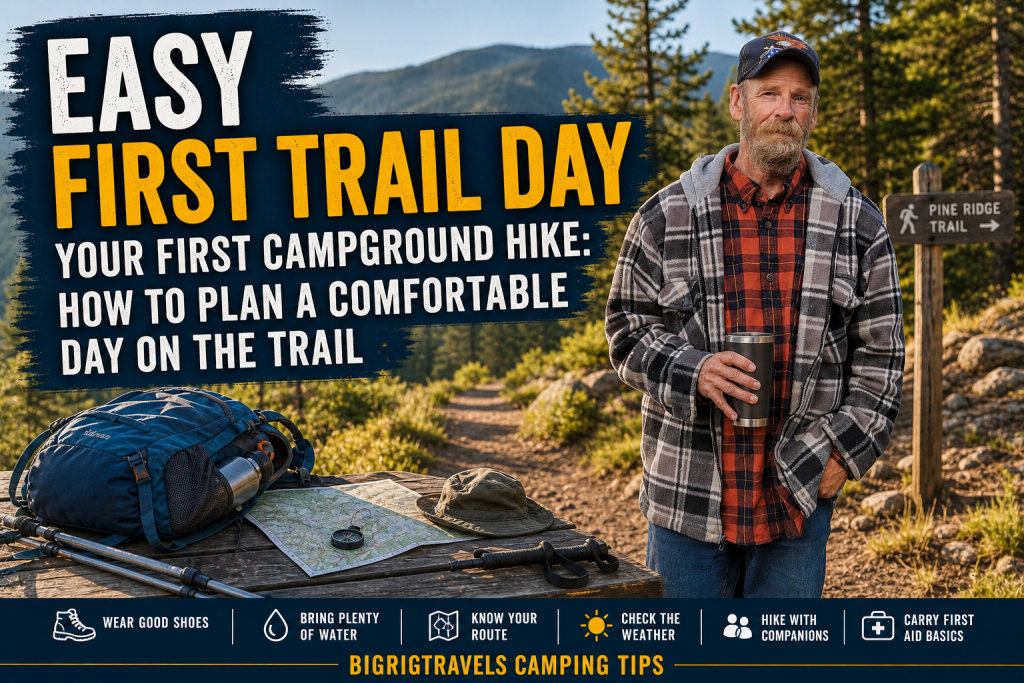
Your First Campground Hike: How to Plan a Comfortable Day on the Trail
Start With a Gentle Plan
A first campground hike does not need to be long or ambitious. The easiest outings usually begin with a short trail, a familiar map, and enough time to turn around without feeling rushed.
Think of the hike as part of the camping day, not a test. A comfortable pace, simple expectations, and a clear destination can make the walk feel relaxing instead of tiring.
Check the Trail Details First
Before leaving the campsite, review the trail distance, elevation gain, surface type, and whether pets, bikes, or permits are allowed. Trail signs, campground bulletin boards, and official land-manager pages are the best places to confirm local rules.
Look for the round-trip distance, not just one way.
Note steep sections, stream crossings, or rocky footing.
Check whether the trail is day-use only or shared with other users.
Pack for Comfort, Not Just Survival
For a short day hike, a small daypack is usually enough. Bring water, a snack, sun protection, a light layer, and a basic first-aid kit. If the weather can change quickly, add rain gear and an extra insulating layer.
Water: enough for the expected distance and conditions.
Snacks: easy-to-carry food that does not need cooking.
Navigation: paper map, downloaded map, or both.
Light: a phone light or small flashlight for late returns.
Dress in Simple Layers
Comfort often starts with clothing. A moisture-wicking shirt, a light insulating layer, and a weather-resistant outer layer can help you adjust as temperatures change. Closed-toe shoes with good traction are usually better than brand-new footwear on a first trail outing.
If your shoes are not well broken in, keep the hike short and stick to easier ground.
Know Your Turnaround Point
For beginners, a turnaround point is one of the most useful parts of the plan. It can be a viewpoint, a stream, a bridge, or a simple mileage mark. Setting that point ahead of time helps keep the hike pleasant and reduces the chance of ending the day exhausted.
If anyone in the group starts feeling unwell, slowing down or heading back early is a normal and smart choice.
Leave the Campsite Ready
Before hiking, make sure the campsite is set for your absence. Secure loose items, close tent windows if needed, and store food and scented toiletries according to campground, park, or forest rules. Local wildlife storage rules may vary, and they matter.
Keep food sealed and out of sight.
Follow bear-box, locker, or vehicle-storage rules where provided.
Do not leave scented items spread around the site.
Watch the Weather and Have an Exit Plan
Weather deserves a careful look before any hike. If forecasts suggest storms, strong winds, extreme heat, or fast-changing conditions, the safest plan is to choose a shorter route, delay the walk, or stay near a reliable exit.
For lightning, use a safe shelter or exit plan and move away from exposed areas. A tent, RV, picnic shelter, or open trail are not lightning shelters. Follow local guidance and head to a substantial enclosed building or fully enclosed vehicle when appropriate.
Carry Water and Pace the Day
Even an easy trail can feel harder in warm weather or at higher elevation. Sip water before you feel thirsty, take short breaks, and keep the first hike slower than you think you need to. A comfortable pace makes the return trip easier.
For families or mixed-skill groups, pausing often can help everyone stay together and enjoy the walk.
Respect Campground and Trail Rules
Campground rules and land-manager rules can differ, so it helps to check both. Some areas require stays on marked trails, restrict pets, or limit travel during muddy conditions. Equipment manuals also matter for items like hydration bladders, trekking poles, or satellite devices, since use and care instructions are set by the manufacturer.
Those details are small, but they help keep a trip smooth and respectful.
Make the Return Easy
Plan enough daylight to come back without hurry. Keep your campsite key, phone, and trail notes where you can reach them quickly. When you return, take a moment to rest, refill water, and check that the camp area is still tidy.
A calm finish often makes the whole hike feel more successful.
Final Thoughts
Your first campground hike can be simple, pleasant, and memorable when the plan stays short and clear. A little preparation goes a long way: check the trail, pack lightly, dress in layers, follow local rules, and leave room to turn back early if needed.
Comfort on the trail usually comes from smart choices before the first step, not from covering a lot of miles.
What helps your first campground hike feel easier and more enjoyable, Road Crew?
Advertisement