
Rainy-Day Camping: Keeping Your Tent and Gear Dry
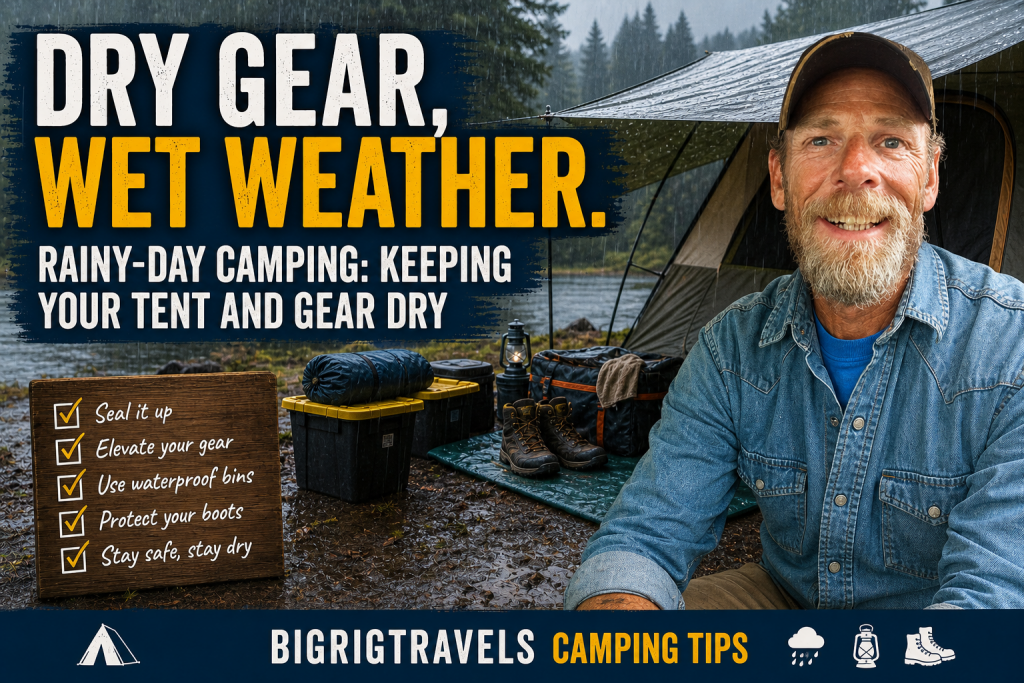
Rainy weather does not have to end a camping trip. With a few simple habits, wet days can still feel calm, organized, and comfortable. The main goal is to keep water out of your living space, protect your gear, and make it easy to dry everything out afterward.
For new campers, it helps to think in layers: choose a smart campsite, set up rain protection before the storm arrives, and keep damp items from spreading through the rest of camp. A little planning goes a long way when the sky turns gray.
Campground rules, land-manager rules, and your equipment manual all matter here. Site features, shelter use, and fire or stove restrictions can vary by location, while your tent, awning, and stove instructions should always guide how that gear is used.
Choose a Drainage-Friendly Site
Low spots collect water, so a slightly higher area is usually easier to manage. Avoid obvious runoff paths, puddle-prone dips, and places where water already seems to gather.
Look for firm ground that sheds water instead of holding it.
Keep clear of streambeds and shallow channels that can fill quickly in rain.
Leave room for safe walking so you are not stepping through mud all weekend.
Set Up the Tent Before the Weather Changes
If rain is in the forecast, it is easier to pitch and secure the tent before the first drops arrive. A dry setup helps reduce wet bedding, soaked clothing, and muddy floors.
Practice the tent setup at home so the process feels familiar.
Use the rainfly and stake points the way the tent manual describes.
Tighten guylines so fabric does not flap and collect water.
Protect the Floor From Ground Moisture
Water can rise from below as well as fall from above. A ground cloth or footprint can help reduce abrasion and moisture, as long as it does not extend beyond the tent floor where it could catch rain.
Keep any footprint smaller than the tent floor if the manufacturer recommends that approach.
Move sharp sticks and rocks before laying out the tent.
Shake out the floor covering before packing it away.
Ventilate to Reduce Condensation
Wet gear is not always caused by rain. Warm breathing and poor airflow can create condensation inside a tent, especially during cool or damp weather.
Open vents if the tent design allows it.
Keep wet shoes and clothes in a separate area if possible.
Avoid sealing the tent so tightly that moist air gets trapped inside.
Pack a Simple Dry Storage Plan
Dry bags, plastic bins, and zipper pouches can help separate clean items from wet ones. The point is not fancy organization; it is keeping one damp towel from soaking everything else.
Store sleeping layers in a waterproof or water-resistant container.
Use one bag for wet rain gear and another for dry clothing.
Keep spare socks easy to reach for late-night changes.
Keep Cooking and Heating Gear Outside
Fuel-burning devices should stay outside and away from tent openings, awnings, and enclosed spaces. Follow the equipment manual and local fire rules for placement, ventilation, and safe operation.
Use only outdoor-rated cooking or heating equipment where permitted.
Keep vents, doors, and fabric openings clear of exhaust and flame.
Never use a fuel-burning device inside a tent or other enclosed shelter.
Have a Weather Exit Plan
Rain itself is one concern, but storms can also bring lightning, wind, or flooding. A safe shelter plan is more important than trying to tough it out in a tent or RV.
Know where the nearest sturdy shelter is before the weather worsens.
Be ready to leave low areas if water begins to rise.
Follow local emergency guidance if conditions become unsafe.
Handle Wet Clothes the Easy Way
Once clothing gets soaked, the goal is to keep the rest of camp dry and stay comfortable. Changing early can make the whole evening feel better.
Keep a dry set of layers sealed away for later use.
Hang damp items where they can drip without touching bedding or food.
Use a separate tote or bag for muddy shoes.
Store Food and Scented Items Carefully
Wildlife storage rules depend on the campground and land manager, so local guidance matters. That includes food, trash, coolers, and scented toiletries such as toothpaste, soap, and deodorant.
Use lockers, hard-sided containers, or vehicle storage when rules call for it.
Do not leave food or scented toiletries in a tent if local rules advise otherwise.
Dispose of trash and wash-up water according to campground instructions.
Dry Gear Gradually After the Rain
Once the weather clears, drying gear thoroughly helps prevent odors, mildew, and fabric damage. The best method depends on the item and its care label.
Open the tent fully when conditions allow air movement.
Wipe down poles, stakes, and zippers before packing them away.
Check sleeping bags, pads, and tarps for hidden damp spots.
Final Thoughts
Rainy camping is usually less about avoiding every drop and more about managing moisture in a steady, practical way. A dry site, careful setup, good ventilation, and clear storage habits can make a big difference. When in doubt, follow the campground’s rules, the land manager’s guidance, and the manual for each piece of gear.
What is your best rainy-day camping tip for keeping gear dry, Road Crew?