
RV Departure Checklist: A Calm Walk-Around Before You Roll
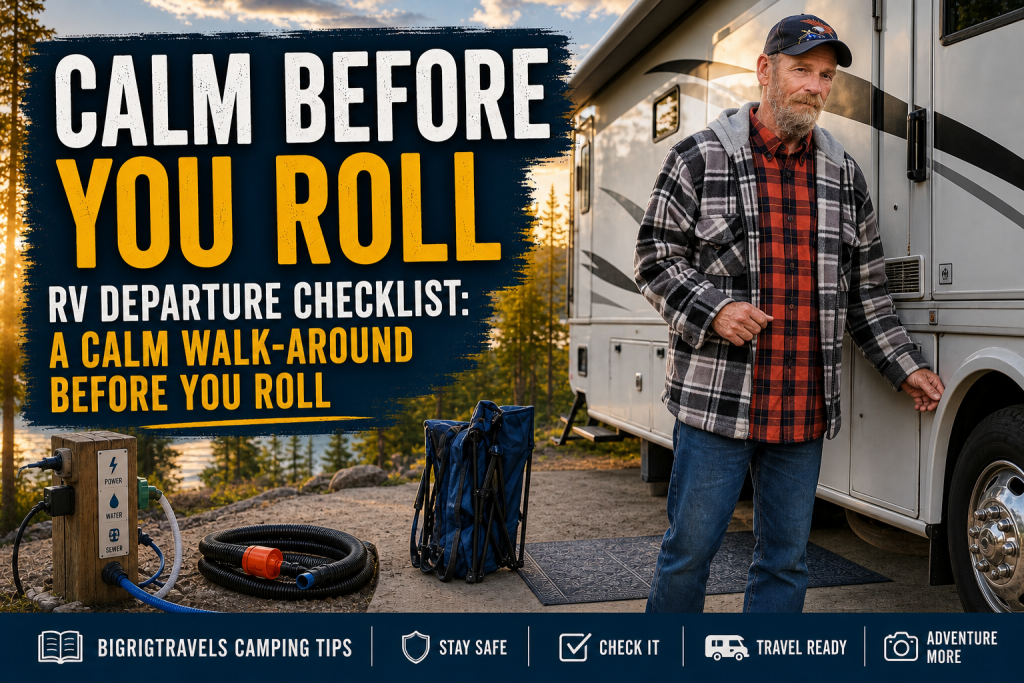
Start with a Slow, Easy Review
Before an RV leaves the site, a calm walk-around can catch small issues before they become road problems. A simple routine helps beginners feel steadier and gives experienced travelers one more chance to notice something out of place. Treat this checklist as a practical example, then adjust it to your coach, tow vehicle, and campsite setup.
If your RV owner’s manual, hitch instructions, or campground rules say something different, follow those directions first. Equipment and site requirements can vary, so the best checklist is the one that matches your rig and the location you are leaving.
1. Confirm the Site Is Ready for Departure
Take one look around the campsite before moving anything. Make sure slides are clear, the awning is secured, outdoor rugs and chairs are stowed, and pets are inside or safely managed. This is also a good moment to check that nothing has been left behind on the ground, picnic table, or hookups.
2. Disconnect Utilities in the Right Order
Utility steps often depend on the equipment instructions for your RV and the campground’s hookup setup. A careful shutdown usually means switching off and disconnecting shore power, water, and sewer connections in the order recommended by the manuals and site rules. Keep caps, hoses, and cords organized so they are ready for the next stop.
Electric power: follow the coach and campground instructions before unplugging.
Water: shut off the supply and relieve pressure as your equipment manual directs.
Sewer: close valves and secure caps before moving the hose.
3. Stow Hoses, Cords, and Gear Cleanly
Loose gear can shift, spill, or get damaged during travel. Coil cords, cap hoses, and store everything in its place. A small bin or dedicated compartment helps keep dirty items separate from clean ones.
4. Walk Around the Exterior
Circle the RV slowly and look low, high, and behind. Check that compartment doors are latched, mirrors are set, steps are retracted, roof vents are secure, and nothing is hanging near the tires or hitch area. A second pass often catches what the first pass missed.
5. Check Tires, Hitch, and Tow Connections
For towable rigs, confirm the coupler, safety chains, breakaway connection, and plug are attached according to the towing equipment manual. For motorhomes, make sure any towed vehicle setup is secure before departure. Tire condition and inflation should be checked by the owner’s manual guidance and the tire manufacturer’s specifications.
6. Secure the Inside Before You Start the Engine
Inside the RV, look for anything that could slide, fall, or open while driving. Close cabinets, latch the refrigerator, secure loose electronics, and put away sharp or heavy items. If the coach has moving parts like an awning or slide mechanism, confirm they are fully stowed according to the manufacturer’s instructions.
7. Verify Weight and Storage Basics
Simple loading habits make travel calmer. Keep heavy items low and centered when possible, and avoid overloading storage bays. If your RV has weight ratings posted by the manufacturer, those numbers matter more than guesswork. A balanced load can help the vehicle handle more predictably on the road.
8. Review Weather and Travel Plans
Before leaving, take a moment to think through weather and route conditions. If thunderstorms, high winds, or other severe weather are expected, have a safe shelter and exit plan in place rather than relying on the RV or tent as lightning protection. Local advisories, road reports, and official weather information are the right sources for current conditions.
9. Keep Fuel-Burning Devices Outside
Portable grills, stoves, heaters, and generators create risks if used in the wrong place. These devices should stay outside and away from openings such as windows, doors, vents, and awnings, following the product manual and campground rules. Exhaust and heat need open air to disperse safely.
10. Make a Final Safety and Wildlife Check
Before rolling out, check that food and scented toiletries are stored according to local campground or land-manager rules. In some places that means bear-resistant containers, lockers, or vehicle storage. The important point is to follow the local rule set for that area, not a one-size-fits-all habit.
Food: store it where the campground rules require.
Scented items: keep toiletries, trash, and pet food secured as directed locally.
Trash: tie it off and move it to the proper disposal location.
11. Do One Last Interior Sweep
Walk through the RV one final time with a slow, calm pace. Check drawers, the bathroom, under beds, and the steps area. A last glance can catch a missing phone charger, an open vent, or a cabinet that did not quite latch.
Final Thoughts
A good departure routine is not about rushing through boxes on a list. It is about building a habit that makes each trip smoother and less stressful. The more often you use the same calm walk-around, the easier it becomes to spot what needs attention before you hit the road.
What is one item you always double-check before leaving camp, Road Crew?
Advertisement