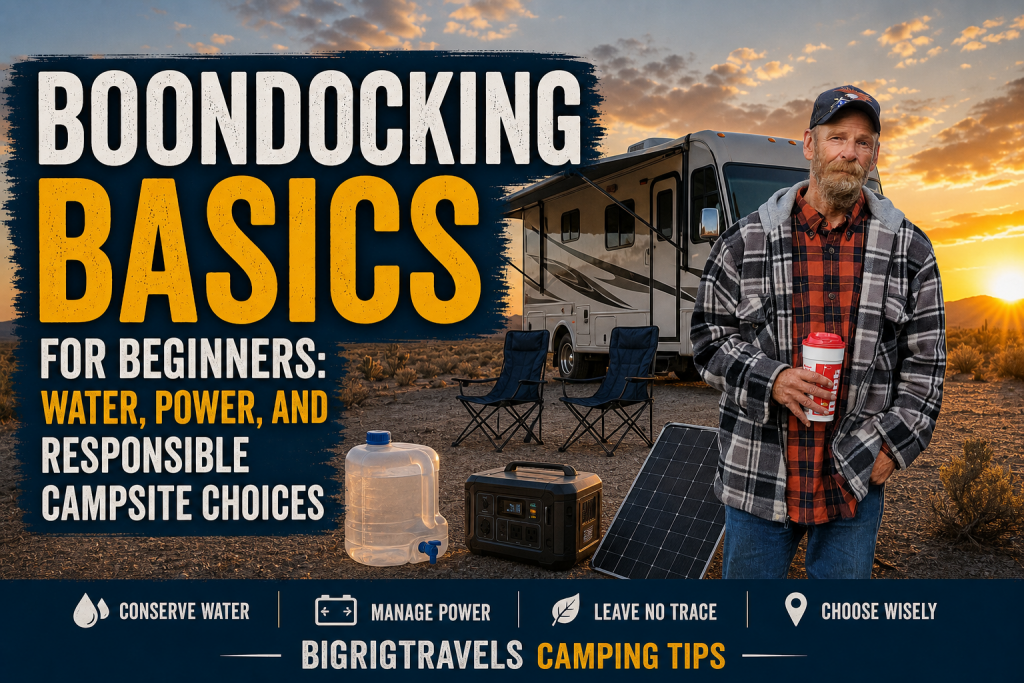
Boondocking for Beginners: Water, Power, and Responsible Campsite Choices
Welcome to Boondocking
Boondocking can feel a little mysterious the first time, but it usually comes down to three basics: enough water, enough power, and a campsite that fits both your rig and the land around it.
For beginners, the goal is not to “rough it” perfectly. It is to make thoughtful choices so a quiet, off-grid stay stays comfortable, legal, and respectful of the place you are visiting.
This guide covers simple, practical habits that help new campers plan ahead without guessing.
Know the Rules Before You Set Up
Boondocking rules vary by land manager, campground, county, state, and federal area.
Some places allow dispersed camping for a limited number of nights, while others require permits, designate specific sites, or prohibit overnight stays entirely.
Check the local land-manager website for current camping rules, stay limits, and closure notices.
Look for posted signs at access roads, trailheads, and pullouts.
Follow site-specific instructions if the area provides numbered pads, fire rings, or designated parking areas.
Start with a Simple Water Plan
Fresh water is usually the first thing beginners notice on a dry-camping trip.
Knowing your tank capacity, daily use, and refill options can prevent stress later.
Review your RV or tent-camping water supply before you leave.
Bring only the water containers your equipment can safely carry.
Keep drinking water separate from wash water so it is easy to manage.
Use Water Conservatively
Small habits make a big difference when water is limited.
Shorter showers, dish rinsing with minimal water, and turning off the tap while brushing teeth all help stretch a supply.
If your setup includes a water pump or filtration system, follow the equipment manual for operation, maintenance, and winterizing steps.
Plan Power Around Your Actual Needs
Off-grid power is easier when you list what truly needs electricity.
Lighting, phone charging, fans, medical devices, and a water pump may matter more than convenience items.
Match battery capacity, solar input, generator use, or portable power options to your expected load.
Read the manufacturer manual for battery limits, inverter use, and charging guidance.
Leave room for cloudy weather, shorter days, or heavier-than-expected use.
Keep Fuel-Burning Devices Outside
Portable stoves, grills, heaters, and generators belong outdoors and away from openings.
Follow the equipment manual for safe distances, ventilation, fuel storage, and cool-down time.
Never use fuel-burning devices inside enclosed spaces, and do not place them near windows, doors, vents, or awnings.
Choose a Campsite That Fits the Ground
A responsible campsite works with the terrain instead of forcing it.
Look for stable ground, room to park without blocking roads or trail access, and enough distance from fragile vegetation or soft soil.
Avoid low spots where water can pool after rain.
Use existing disturbed areas when allowed, instead of expanding your footprint.
Keep enough clearance for emergency access and turning around if needed.
Leave No Trace in Small Ways
Even a short stay can affect a site if trash, food scraps, or gray water are left behind.
Pack out all garbage, food packaging, and micro-trash such as twist ties and bottle caps.
Dispose of wastewater only where local rules allow, and never assume a remote spot is a dumping ground.
Store Food and Scented Items Carefully
Wildlife rules differ by region, and some areas require specific containers or lockers.
That includes food, trash, coolers, pet food, and scented toiletries such as toothpaste, lotion, deodorant, and soap.
Follow local wildlife-storage rules exactly, even if the campsite seems quiet.
Keep scented items secured in the vehicle, storage locker, or approved container when required.
Do not leave food or toiletries unattended outside overnight.
Prepare for Weather with a Safe Exit Plan
Weather can change quickly in open country, so a boondocking plan should include where to go if conditions become unsafe.
Know the nearest shelter options, pavement, town, or developed campground before you settle in.
For lightning, seek a safer shelter or leave the exposed area if you can do so early and safely; do not rely on an RV or tent as lightning shelter.
Keep Your Site Easy to Leave
A good boondocking setup should be simple to pack up if weather, road conditions, or land restrictions change.
Park with your exit path in mind, keep gear organized, and avoid spreading equipment farther than necessary.
That way, you can depart calmly if the site no longer feels suitable.
Final Thoughts
Boondocking is most enjoyable when beginners focus on the basics: water, power, site selection, and respect for the land.
With a little planning, off-grid camping can feel less like improvising and more like staying ready.
The simplest approach is often the best one: know the rules, use resources carefully, and leave the campsite looking nearly untouched.
What boondocking question would you like the Road Crew to answer next?
Advertisement