
Camping Around Wildlife: Food, Toiletries, and a Clean Campsite
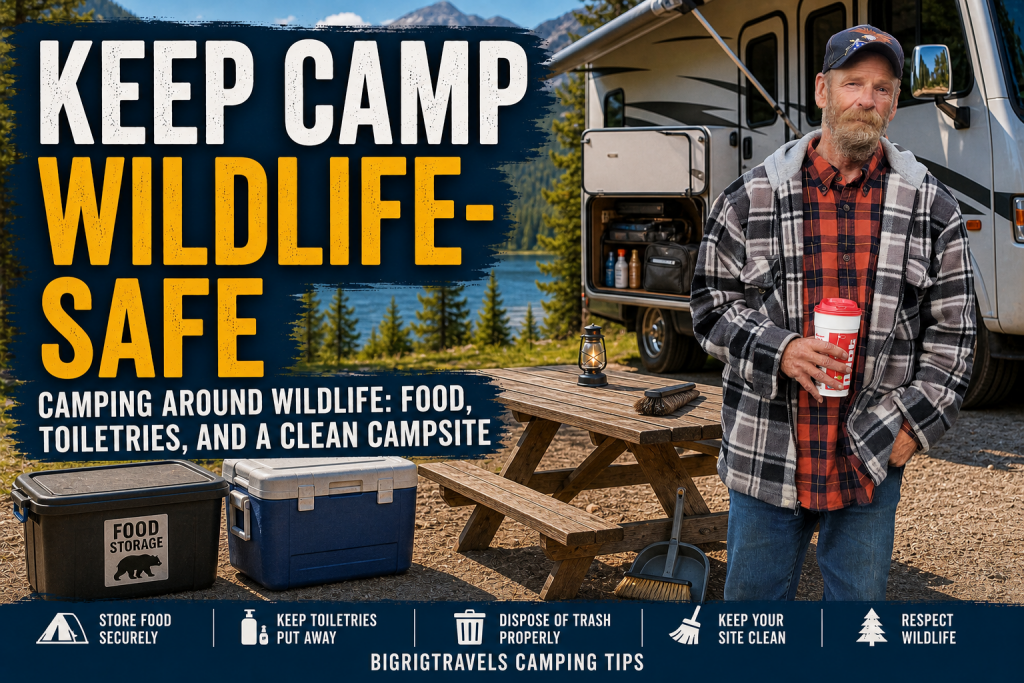
Welcome to Camp
Camping near wildlife can be one of the best parts of getting outside, but it also adds a few simple habits that help keep animals and people safe.
The main idea is easy: keep food smells down, store items the right way, and leave your site tidy so wildlife has fewer reasons to visit.
Different campgrounds and public lands can have different storage rules, bear box requirements, and trash policies, so it helps to check the local campground or land-manager guidance before you go.
Start with the Smell Test
Animals can be drawn to anything with a scent, not just dinner food.
That includes snacks, wrappers, pet food, toiletries, sunscreen, lip balm, and even scented wipes or toothpaste.
Think of anything fragrant as something that needs careful storage, whether you are camping in an RV, a tent, or a cabin site.
Use the Right Storage System
Where you store food depends on the rules at your campground or park.
In areas with bear boxes or lockers, use them as directed by the site rules.
If vehicle storage is allowed, keep food and scented items sealed and secured inside the vehicle.
For tent campers, use approved lockers, hung storage where permitted, or other methods the land manager allows.
Follow the site instructions for any special rules about coolers, trash, or pet food.
Keep Toiletries Together
A small toiletry bag makes it easier to manage items that carry strong scents.
Toothpaste, soap, deodorant, lotions, wipes, and feminine hygiene products should be treated like other attractants and stored according to local rules.
If your campground asks for scented toiletries to be locked away, that includes them all, not just the food items.
Cook Clean, Then Clean Again
Cooking odors can linger, so a tidy camp kitchen matters.
Wipe down tables, rinse cookware, and put leftovers away promptly after meals.
Use sealed containers or bags for food scraps, and do not leave plates, utensils, or crumbs out overnight.
Trash Management Matters
Trash is one of the strongest wildlife attractants at camp.
Use trash cans, dumpsters, or pack-out systems exactly as the campground directs.
If garbage storage is not provided nearby, keep trash sealed until you can dispose of it properly.
Keep one bag for food waste and one for dry trash if that fits the campground system.
Never let trash overflow from open bins.
Store all garbage with the same care you use for food.
Pet Food Needs the Same Attention
Pet food smells like food to wildlife, because it is.
Store kibble, treats, bowls, and feed bags with the same caution you use for human meals.
After pets eat, pick up bowls and leftovers right away unless your campground’s rules say otherwise.
Keep the Site Free of Crumbs
A clean campsite helps reduce surprises in the dark.
Sweep picnic tables, shake out seat cushions, and check the ground around chairs and cooking areas for dropped food.
Small crumbs, spilled drinks, and grease spots can all be worth cleaning up before bedtime.
Know the Wildlife Distance Rule
Local guidance often includes how far to stay from animals, especially larger ones.
Never feed wildlife, even if it seems harmless or curious.
Feeding animals can change their behavior, put campers at risk, and create problems for the animal later.
Weather and Safety Planning
If weather turns severe, the safest choice is to move to a suitable shelter or leave the area as directed by local authorities and campground staff.
Do not rely on a tent or RV as lightning shelter.
For fuel-burning devices like camp stoves, lanterns, or heaters, keep them outside and away from openings, following the manufacturer’s manual and campground rules.
Leave the Site Better Than You Found It
A clean campsite helps the next camper and lowers the chance that animals will return looking for leftovers.
Before you leave, do a slow walk-through for food scraps, wrappers, toiletries, and anything scented that may have been set aside.
It is a simple habit, but it makes a big difference.
Final Thoughts
Camping around wildlife does not need to feel complicated.
With careful storage, a tidy cooking area, and attention to campground rules, you can enjoy nature while helping keep animals wild.
When in doubt, use the local rules first, then the equipment manual, and treat anything scented as something worth securing.
What wildlife-safe camping habit has helped your Road Crew keep camp cleaner and calmer?
Advertisement