
Fall Camping: Simple Ways to Stay Warm and Comfortable
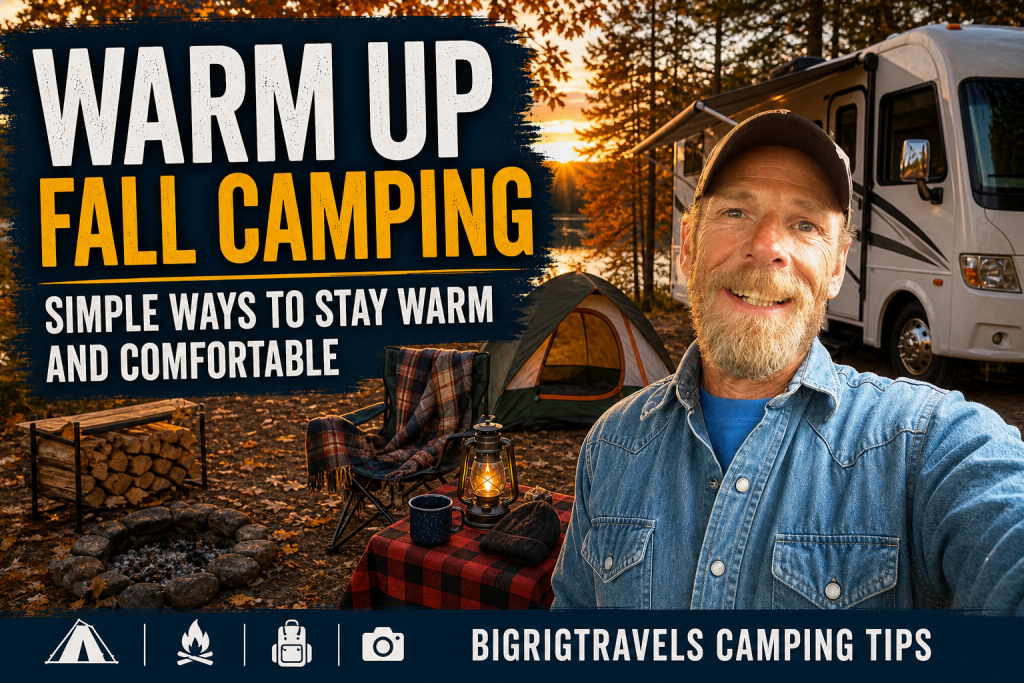
Welcome to Cool-Weather Camping
Fall camping can be one of the most relaxing times to get outside. The crowds often thin out, the air feels crisp, and a few simple comfort habits can make a big difference in how the day and night feel.
Whether the plan is an RV site or a tent site, the basics are similar: stay dry, block the wind, layer your clothing, and pay attention to campground rules and your own equipment manuals. Small choices add up quickly when the temperature drops after sunset.
This guide shares beginner-friendly ideas that fit many camping styles without making assumptions about any one setup. Local campground rules and land-manager rules can vary, so it is always worth checking the posted guidance where you camp.
1. Start With the Right Layers
Layering is one of the simplest ways to stay comfortable in changing fall weather. Instead of relying on one heavy item, use clothing that can be added or removed as the day warms up or cools down.
Base layer: choose something that helps move moisture away from the skin.
Mid layer: fleece, wool, or another insulating layer can help trap warmth.
Outer layer: a wind-resistant or rain-resistant layer helps when conditions turn breezy or damp.
2. Keep Dry Wherever Possible
Cool air feels much colder when clothing or bedding gets damp. A dry seat, dry socks, and a dry sleeping area can make the evening feel much more manageable.
Keep rain gear easy to reach.
Store damp items separately from dry clothing.
Use a ground pad, mat, or floor covering that fits your setup.
3. Choose Bedding for the Season
Sleeping comfort depends on more than the sleeping bag alone. The insulation between you and the ground matters, and so does matching your bedding to expected nighttime temperatures.
Use a sleeping pad, air mattress, or mattress system appropriate for your setup.
Check the manufacturer’s temperature guidance for sleeping bags and blankets.
Bring an extra layer for early morning chill.
4. Block the Wind
A calm campsite often feels warmer than one with steady wind. Even a light breeze can pull heat away, especially after dark.
Use tents, awnings, screens, or natural barriers only as allowed by the site rules.
Close openings when the weather calls for it, but keep ventilation needs in mind.
Set up chairs and cooking areas where they are less exposed if the site layout allows.
5. Use Heat Sources Safely
Many campers use propane or other fuel-burning devices for comfort or cooking, but these belong outside and away from openings unless the equipment manual specifically allows a different use. Good airflow is important, and equipment instructions should always lead the way.
Follow the manufacturer’s manual for setup and clearances.
Keep fuel-burning devices outdoors and away from tent flaps, doors, vents, or windows.
Never assume a tent or RV is a safe lightning shelter.
6. Plan for Weather Changes
Fall weather can shift quickly, so a simple exit plan is one of the most useful comfort tools you can have. If strong storms, lightning, high winds, or other hazardous weather move in, the safest choice is to head to an appropriate sturdy shelter or leave the area as conditions and local guidance allow.
Know where the nearest sturdy building or vehicle access point is located.
Keep shoes, keys, and outerwear easy to grab.
Watch for changes in temperature, wind, and sky conditions.
7. Make a Cozy Evening Routine
Once the sun goes down, a few predictable habits can make camp feel more comfortable. Routine helps beginners feel settled and keeps everyone from hunting for essentials in the dark.
Lay out tomorrow’s clothes before bed.
Put flashlights or headlamps in a known spot.
Keep a warm drink, blanket, or extra socks handy if those items fit your setup.
8. Stay Comfortable Around the Campfire
A campfire can add warmth and a pleasant place to gather, but fire rules vary by location. Local restrictions, burn bans, and campground policies matter more than habit or tradition.
Check posted fire guidance where you camp.
Keep fires small and attended when allowed.
Completely extinguish any fire before leaving it unattended or going to sleep.
9. Store Food and Scented Items Carefully
Wildlife habits differ by region, and local storage rules should always come first. That includes food, trash, toiletries, and other scented items such as lotions or toothpaste.
Use lockers, containers, vehicles, or hanging methods only where allowed and appropriate.
Follow campground or land-manager rules for scented toiletries and trash storage.
Keep the campsite clean to reduce attractants.
10. Check Your Gear Before You Leave
A quick gear review before departure can prevent a lot of discomfort later. This is especially helpful when fall temperatures dip earlier than expected.
Test lights and pack extra batteries if needed.
Confirm that bedding, rain gear, and layers are easy to reach.
Review your equipment manuals for any weather-related setup notes.
Final Thoughts
Fall camping does not need to be complicated to feel good. Dry layers, thoughtful bedding, wind protection, and a simple weather plan go a long way toward a calm, comfortable trip.
When in doubt, follow the local rules where you camp, trust the instructions for your gear, and keep safety decisions centered on changing weather and current conditions. A little preparation can make chilly evenings feel pleasantly memorable.
What fall camping comfort tip has helped your Road Crew the most?
Advertisement