Camp Cooking Made Easy: Planning Meals Before You Leave Home
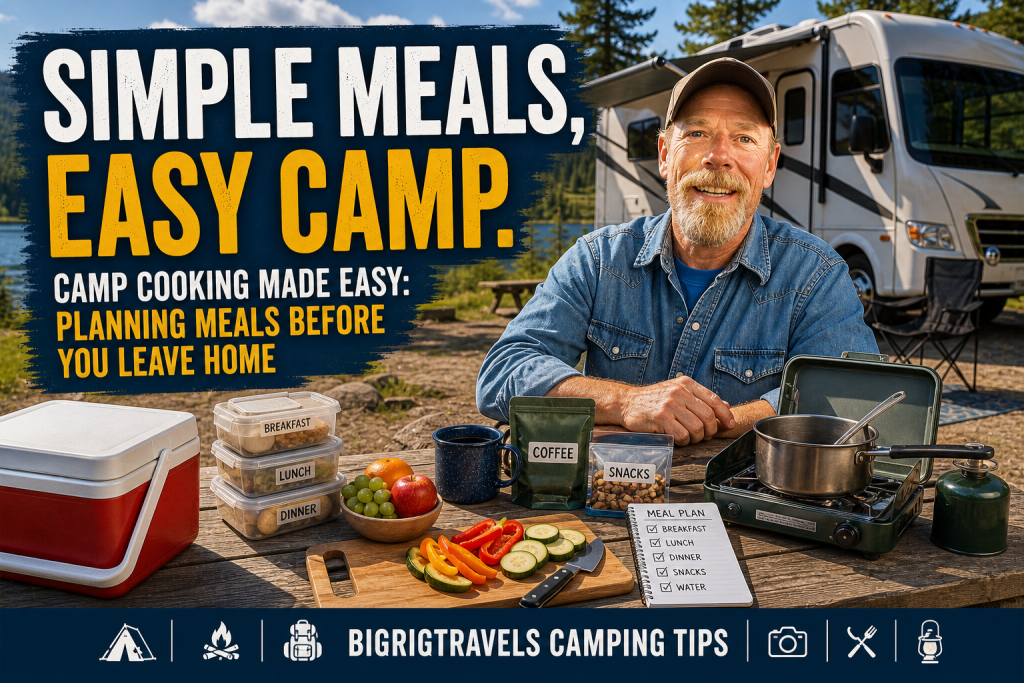
Start With Simple Meals
Begin with breakfasts, lunches, dinners, and snacks you already know how to make. Familiar meals are easier to pack, store, and prep at camp.
For many beginners, the best plan is not fancy camping recipes. It is a short list of meals that use overlapping ingredients and minimal tools.
Build a Meal List Before Packing
Write down each day’s meals before you leave. A basic list helps reduce forgotten items and prevents overbuying food that will not get used.
Keep your list realistic for your cooler space, stove space, fridge space, and cleanup time.
Breakfast ideas
Think cereal, oatmeal, eggs, muffins, fruit, or breakfast sandwiches.
Lunch ideas
Sandwiches, wraps, soup, leftovers, and simple salads are easy to manage.
Dinner ideas
One-pan meals, grilled items, pasta, tacos, or foil-style meals are common beginner choices.
Snack ideas
Pack fruit, crackers, trail mix, granola bars, or other shelf-stable foods for quick bites.
Match Meals to Your Gear
Cooking plans should fit the equipment you actually have. A meal that needs a full oven, multiple pans, or long simmering times may be hard to manage at camp.
Check your stove, grill, cooler, utensils, and storage containers before deciding what to bring. Equipment manuals are the best place to confirm how each item should be used and cleaned.
Use Ingredients That Travel Well
Some foods handle travel better than others. Choose items that stay fresh easily and do not require delicate handling.
Dry goods
Pasta, rice, oats, crackers, and bread are simple staples.
Shelf-stable foods
Beans, tuna, soup, sauce, and canned vegetables can help round out meals.
Fresh foods
Apples, oranges, carrots, and potatoes often travel better than soft produce.
Plan for Cooler Space
If your trip uses a cooler or a small fridge, think about what needs to stay cold first. Perishable foods should be packed with enough ice or cold sources to keep them at safe temperatures.
Keep the cooler closed as much as possible, and group foods by meal so you are not searching through it repeatedly.
Prep at Home When You Can
Many camp meals become easier when a little work happens in your kitchen before departure. Wash produce, measure spices, chop vegetables, and portion ingredients into containers or bags.
Prepared ingredients can reduce clutter at camp and shorten cleanup.
Pack Cooking Tools by Meal Type
Small tool changes can make cooking less stressful. Bring only the utensils and pans your menu requires.
For breakfast
Spatula, bowl, fork, mug, and a small pan may be enough.
For dinner
A pot, lid, tongs, knife, and cutting board may cover most tasks.
For cleanup
Soap, scrubber, towels, trash bags, and a basin can make washing up easier.
Keep Food Storage Organized
Separating food by day or by meal can help campers find things quickly. Labels are useful when several people share the same supplies.
Where local campground or land-manager rules apply, follow them for food storage, wildlife-proof containers, and where scented toiletries belong. Those rules vary by location.
Think About Wildlife and Scented Items
Food is not the only item that can attract wildlife. Local rules may also address trash, coolers, pet food, and scented toiletries such as toothpaste, deodorant, and soap.
Store items the way local guidance requires, and keep camps tidy to reduce attractants.
Keep Cooking Safe and Simple
Fuel-burning devices such as camp stoves, charcoal cookers, and lanterns should stay outside and away from openings, following manufacturer instructions and any campground rules. They are not for use inside tents, RVs, or enclosed shelters.
For weather concerns, keep a calm exit plan and a nearby sturdy shelter option where available. If severe weather develops, move to the safest available shelter as directed by local authorities or campground staff.
Leave Room for Easy Cleanup
Cleanup is often smoother when meals create fewer dishes. One-pot dinners, disposable liners used according to local rules, and reusable containers can help reduce work after dark.
Plan trash disposal before you arrive so garbage does not pile up at camp.
Final Thoughts
Meal planning before you leave home can turn camp cooking into a calm, predictable part of the trip. A short menu, a practical grocery list, and the right storage plan usually matter more than complicated recipes.
When you keep meals simple and match them to your gear, you make more time for the fun part of camping.
What are your favorite beginner-friendly camp meals, Road Crew?
Advertisement