How to Choose the Perfect Campsite: RV & Tent Camping Tips for the Best Stay
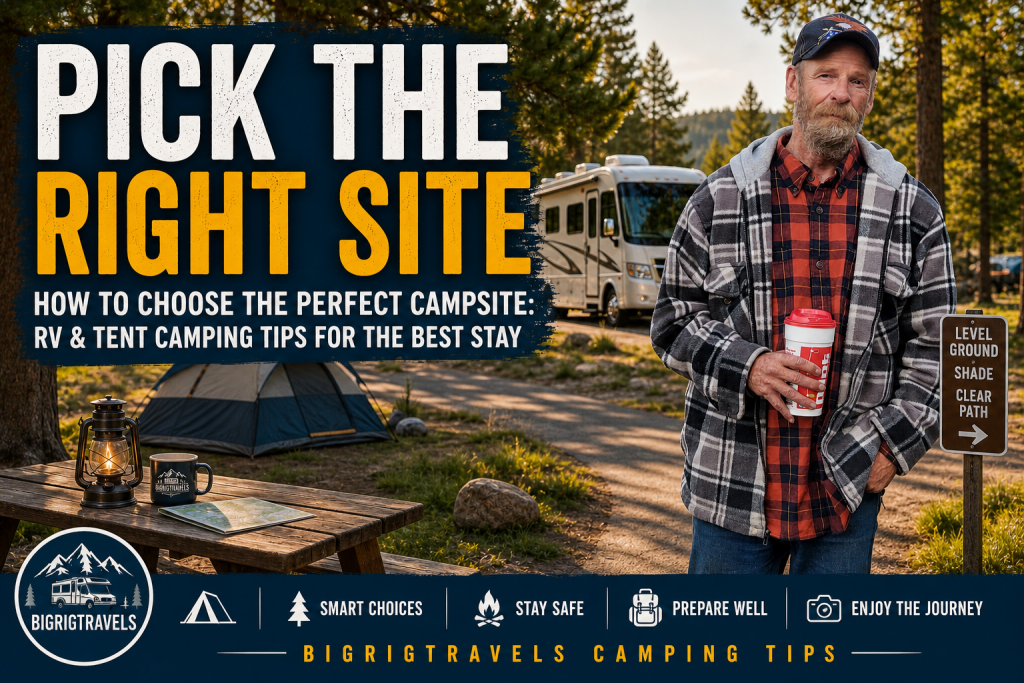
Choosing a campsite can feel like a small decision, but it often shapes the whole trip. A good site can make setup easier, sleep better, and help everyone settle in with less stress.
Whether you travel in an RV or sleep in a tent, the best campsite is usually the one that matches your gear, your comfort level, and the rules of the place you’re visiting. A little attention up front can save a lot of frustration later.
Think of campsite selection as a practical checklist rather than a test. The goal is simply to match the site to your plans, your equipment, and the weather.
1. Start with the Basics
Look for a site that fits your setup, travel style, and the length of your stay.
RV campers often need enough room for slide-outs, awnings, and parking clearance.
Tent campers usually benefit from level ground and space for sleeping, cooking, and relaxing.
Longer stays may feel easier in sites with shade, water access, or nearby restrooms.
2. Check the Ground
Stable, level ground makes camping more comfortable and easier to manage.
For tents, look for smooth ground with good drainage and no sharp rocks or roots.
For RVs, a level site can help with sleeping, appliance operation, and door alignment.
Avoid low spots where water may collect after rain.
3. Match the Site to the Weather
Weather can change a campsite from pleasant to difficult very quickly.
Shade can help on hot days, while a more open site may feel better in cool weather.
If storms are possible, identify a safe shelter or exit plan before you settle in.
Do not treat an RV or tent as lightning shelter; follow official guidance and move to a substantial building or hard-topped vehicle when instructed by local safety authorities.
4. Read the Campground Map Carefully
Maps can reveal details that matter after you arrive.
Check whether the site is pull-through, back-in, or walk-in.
Note nearby bathhouses, dumpsters, water spigots, and trailheads.
Look for road width, turn radius, and tight corners if you are towing or driving a larger rig.
5. Think About Privacy and Noise
Some campers prefer quiet corners, while others want a social, central location.
Sites near playgrounds, roads, or restrooms may be busier.
Edge sites can feel more open, but they may have more wind or foot traffic depending on the campground.
Choose a spot that fits your need for calm, convenience, or easy access.
6. Follow Rules for Food and Scented Items
Wildlife storage rules vary by park, forest, and campground, so local directions matter.
Use lockers, storage boxes, or vehicle storage when required.
Keep food, trash, and scented toiletries secured according to local campground or land-manager rules.
Do not assume a general habit is enough; use the site-specific method posted or required where you are camping.
7. Plan for Water, Power, and Restrooms
Convenience can be a big part of comfort, especially for beginners.
RV campers may want to check whether electrical, water, and sewer hookups are available and what equipment their owner’s manual requires.
Tent campers may want closer access to water spigots and bathrooms, especially on first trips.
If you need to use campground utilities, follow both the campground rules and the equipment manual for your RV or devices.
8. Look for Safe Cooking Space
Camp meals go more smoothly when your cooking area is practical and uncluttered.
Choose a spot with room for a table or prep area if you plan to cook outside.
Keep fuel-burning devices outside and away from openings, following the manufacturer’s instructions and campground rules.
Never use grills, stoves, or generators in enclosed or poorly ventilated spaces.
9. Consider Sun, Wind, and Trees
Natural features can improve comfort, but they also deserve a close look.
Trees may provide shade, but avoid sites with dead limbs or obvious hazards overhead.
Wind exposure can affect tents, awnings, and outdoor furniture.
A site with morning shade and afternoon sun may feel very different from one with all-day exposure.
10. Respect the Rules of the Place
Campground rules and land-manager rules are not always the same, so both should be reviewed.
Some areas limit generators, campfires, pets, quiet hours, or vehicle placement.
Reservation details may not match posted site rules, so it helps to review both before arrival.
When in doubt, follow the local posted rule or ask campground staff for clarification.
Final Thoughts
The perfect campsite is usually the one that makes your trip easier, safer, and more enjoyable for your style of camping.
Take a few minutes to compare the site, the weather, and the local rules before you settle in. That small habit can lead to a much smoother stay for both RV and tent campers.
What do you look for first when choosing a campsite, Road Crew?
Advertisement